
Operating a business involves transporting goods rapidly, safely, and economically. If you are sending goods (products) to retailers, warehouses, or distribution centres, pallet delivery is one of the easiest freight options within Australia.
Pallet delivery’s advantages are important benefits compared to sending multiple loose boxes or parcels; pallet delivery secures packaged goods onto a single platform for safe transportation.
This makes handling faster, safer for transportation. The consolidated transport of the pallet is cost-effective. For many Australian businesses this is the smart option for managing freight at scale.
Here is everything you need to know about pallet delivery in Australia.
What is Pallet Delivery?
Pallet Delivery means the transport of goods stacked and secured on pallets. A pallet is base of support that enables a lift truck or truck to transport goods easily.
The goods are handled as a unit instead of item by item. By involving a pallet, the time to handle and essence of handling, and speed of delivery can be reduced significantly.
Why Businesses Choose Pallet Delivery

Australian businesses across sectors use pallet delivery as an easy freight solution. The benefits entail a simple freight process, with the following key benefits:
- Efficiency : your goods are transported in bulk, delivering time efficiency.
- Safety : reduced manual handling time equals lowered risk of damage and workplace risks.
- Cost effective : minimal items equal a reduced freight cost compared to sending multiple items as a smaller consignment.
- Scalability : pallet delivery services are available for a metropolitan package in various containers, which translates to interstate and regional transport which aligns into every supply chain.
various containers, which translates to interstate and regional transport which aligns into every supply chain.
How Pallet Delivery Works in Australia
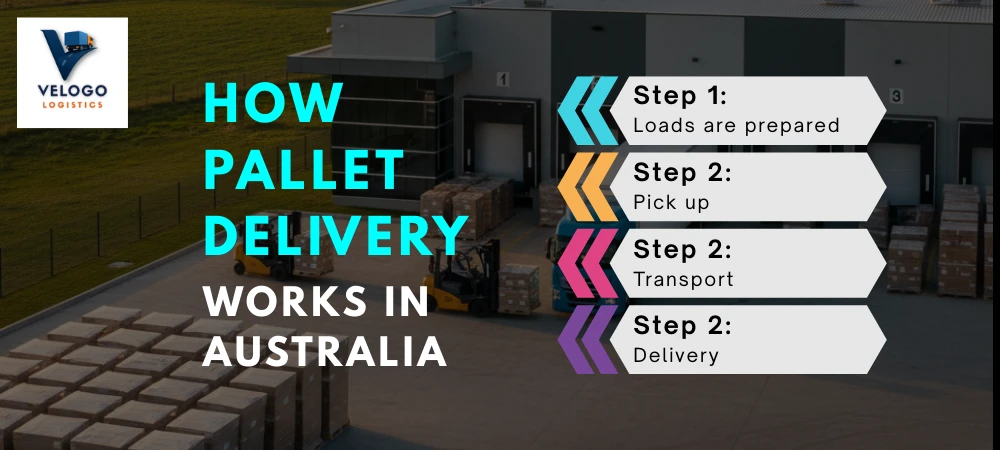
The three-step, straight line process goes like this:
- Step 1: Goods are prepared: boxes/consignments etc. are packed, stacked and secured onto a pallet.
- Step 2: Pick up: a freight company will pick up your pallets from point sole when transport is ready.
- Step 3: Transport: the pallets are transported by road freight, which is the most common pick-up & delivery method in Australia.
- Step 4: Delivery: the pallets are delivered to the destination site, ready to be manually unloaded at warehouses, retail outlets or distribution centres.
This straightforward step process is handy for every business when articulating a freight conveyance supply chain!
Key Benefits of Pallet Delivery
The opportunities created with pallet delivery can benefit the business beyond what your savings, profits, and cost are:
- Speed: speedily loaded and unloaded.
- Reliability: delivered in a better condition.
- Flexibility: works from local, interstate, regional delivery.
- Professional product handling: safe transfer of your bulk heavy or fragile product.
Common Pitfalls and Challenges
Pallet delivery can be a very efficient forwarding service, however, there are very common pitfalls with the delivery service:
- Pallet wrap fails. If a pallet is poorly wrapped, the wrapped pallet can fail, collapse or get damaged.
- Delivery delays. Delivery can take longer than anticipated, especially with regional and remote deliveries.
- Extra costs. Extra charges can be incurred for oversized pallets, or if the delivery point has restricted area access.
These pitfalls can be easily minimised and often bypassed by packaging the goods correctly, along with having a reliable freight partner that communicates well.
Tips for Sending Goods by Pallet Delivery
A little preparation will go a long way:
- To consistently use and identify your size pallet you will want to use the correct size pallet
- Stack the goods properly to even out the pallet weight, starting with heavier items at the bottom.
- Wrap, strap the goods and secure (or encapsulate) the load and position to manage the contents from moving.
- Label contents or packaging clearly as to the receipt of the delivery by posting labels with addresses and indication of by certain handling instructions.
These simple methods will limit damage to your goods and to receive the delivery in a reasonable time frame.
Choosing Right Pallet Delivery Service Provider
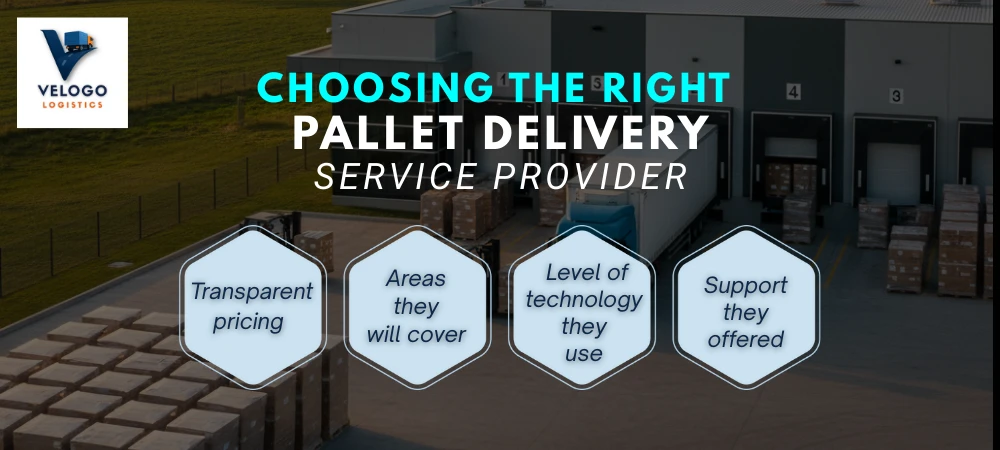
Choosing a freight provider is a critical decision and will shape your freight experience. When comparing pallet delivery service providers in Australia, please be mindful of:
- Transparent pricing - ask for detailed quotes
- Areas they will cover - confirm if their primary delivery is metro, regional, and/or interstate
- Level of technology they use - tracking capabilities will provide visibility of your consignment.
- Support that is offered - good customer service will enhance service and fix issues faster.
A freight provider you can trust offer more than just your freight option; they will be concentrating on being a partner in the transportation of your supplies and your business.

In Summary
Pallet delivery remains one of the safest and most cost-effective freight options in Australia. It enables transporters to deliver freight faster, and safer, and on a larger scale.
From manufacturer to wholesaler to retailer, pallet delivery services are an integral part in making sure supply chains are intact.
Are you looking for a pallet delivery service from a freight company in Australia you can trust? Contact us today for a personalized pallet delivery solution to save your business time and money while guaranteeing your consignment, arrives safe.
FAQs
Pallet delivery means that goods are placed on a pallet and transported as one unit, which streamlines freight, providing security and speed.
It reduces time, the handling process and the risk of damage and is less expensive for bulk consignments.
Place items stacked evenly, secure cartons with shrink wrap/straps and label with delivery information.
Yes. All pallet delivery services include metro areas, interstate routes and regional reach throughout Australia.
Manufacturers, wholesalers, retailers and any business that shifts regular consignments of bulk or heavy goods.